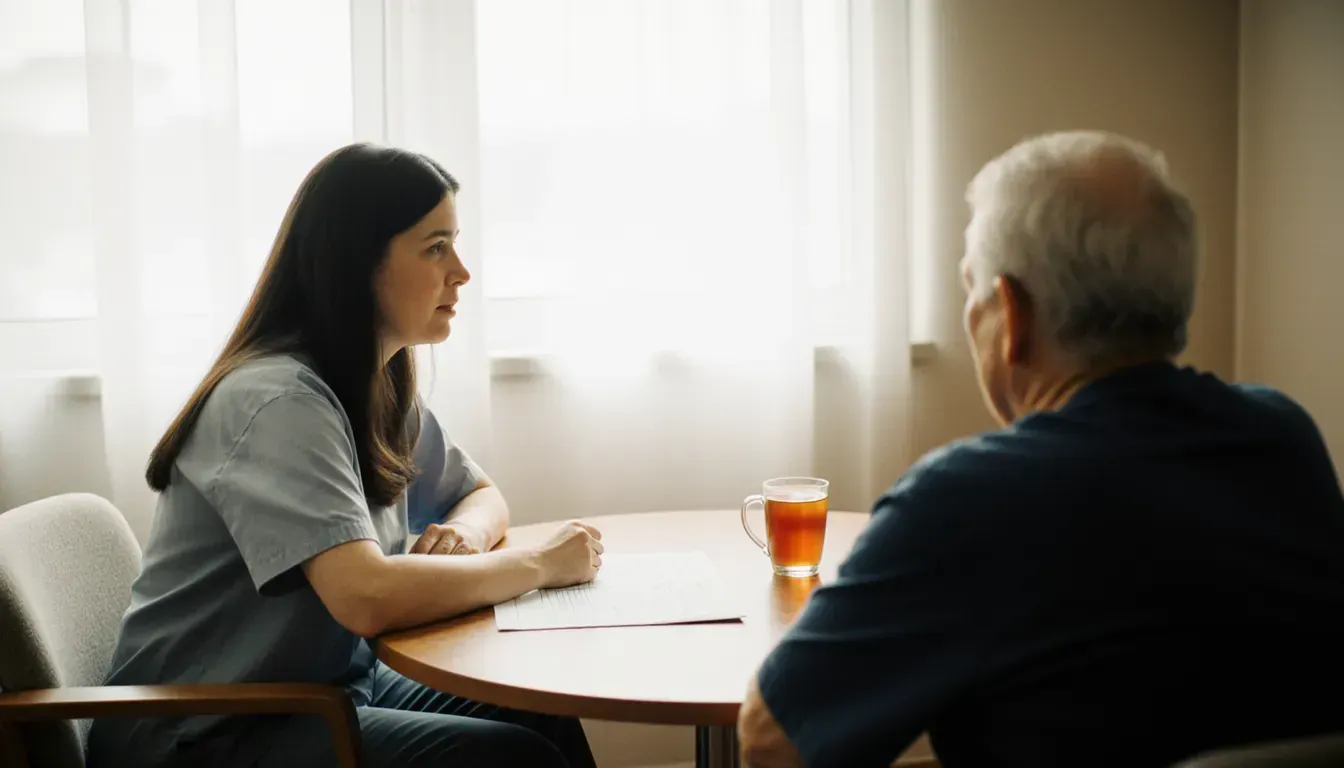
Worried about someone who can get to a gun?
If a person you love might hurt themselves or someone else, Maryland lets you ask a court to take their guns away for a while. It is called an Extreme Risk Protective Order, or ERPO. This site shows you how.
Petition Builder
Answer questions in plain language. We put your answers on Maryland’s official court forms so you can print them and take them to court. Nothing you type leaves your device.
Start the formsMore ways to stay safe
A court order is not the only choice. Many families lock guns up or store them somewhere else until things calm down. See the options, a map of storage sites, and a family safety plan you can print.
See the optionsWarning signs
What Maryland courts look at when deciding if someone should not have a gun right now.
OpenHow it works
Who can file, the steps, how long an order lasts, and what happens to the guns.
OpenGoing to court
What to expect at the hearing, what to bring, and how to explain what you have seen.
OpenYou do not have to file it yourself
Asking a court to take a loved one’s guns is a hard thing to do. If you are not comfortable being the one who files, other people can.
File it yourself
Spouses, partners, relatives, people who live with the person, people who share a child with them, and legal guardians can file [8].
Petition BuilderTalk to the police
Police officers can file too [8]. In Maryland’s first years with this law, police filed more than half of all petitions [25]. Tell them what you have seen and that there are guns.
How to askTalk to their doctor or therapist
A doctor, therapist or other clinician who has examined the person can file [8][1]. You can tell them what worries you.
How to askA gun within reach can turn a bad moment into a death
The worst of a crisis often passes. Putting time and distance between a person and a gun gives them the chance to get through it.
How an order happens
What the person said or did, when, and what you know about their guns.
Use the Petition Builder or get paper forms from a District Court clerk or commissioner.
Give the forms to the clerk. If the courthouse is closed, go to a commissioner. It is free.
You tell the judge what you know. Later the person gets a chance to tell their side.
Police collect the guns and the person cannot buy new ones while the order lasts.
What an order does
- The person must hand over their guns and ammunition to police.
- They cannot buy or have guns while the order lasts.
- A final order can last up to one year.
- It is a civil order, not a criminal charge.
Source: Maryland Judiciary [8]
What it does not do
- It does not order the person to stay away from you or your home.
- It does not order treatment.
If you need protection for yourself, a peace order or protective order may fit better. More on this [8]
Helping the judge understand the situation
The judge was not there. Your job is to tell the truth about what you saw and heard, as clearly as you can. The decision belongs to the judge.
Have you, or someone you love, been under an ERPO?
If you are under an Extreme Risk Protective Order now, have been in the past, or a loved one has, researchers would like to hear about your experience.
- About an hour
- Can be done virtually
- Compensated
- Private and confidential
If someone is in danger right now
Call 911. If someone is thinking about suicide, call or text 988. You can call 988 for yourself or about someone else, at any hour.